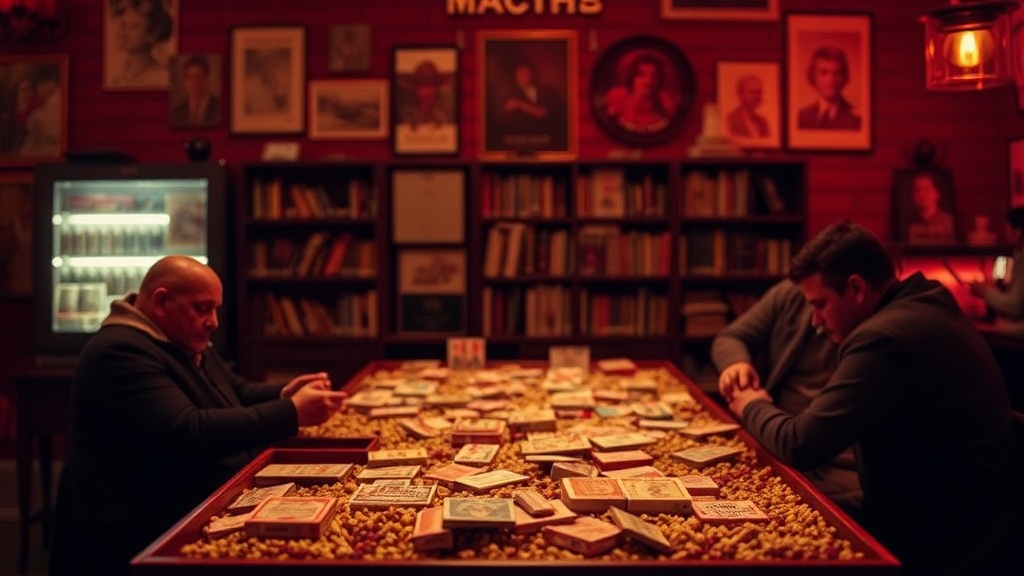
Were Matchbooks Ever Worth Serious Money? A Reality Check for Modern Collectors

Most collectors assume vintage matchbooks have always been cheap, disposable novelties—that serious money never changed hands for these tiny paper rectangles. That assumption is dead wrong. In the 1980s and early 1990s, certain rare matchbooks sold for hundreds, even thousands of dollars at auction. The market looked very different then, and understanding that history matters if you are building a collection today.
This guide examines what drove those historic prices, why the market shifted, and what lessons today's collectors can apply—whether you are hunting for undervalued gems or simply trying to understand what your collection might actually be worth.
What Matchbooks Sold for Big Money—and Why?
During the peak collecting years of roughly 1982 to 1995, serious money flowed through the matchbook hobby. The Rathcamp Matchcover Society (the leading collector organization founded in 1941) documented sales that would make modern collectors blink. Rare Disney promotional matchbooks from the 1930s—particularly those tied to early film releases—regularly commanded $300 to $800. A pristine Charles Lindbergh commemorative from 1927 sold for over $1,200 at a 1989 auction. World War II-era military matchbooks with unit insignias? Four-figure prices were not unheard of.
Several factors drove these valuations. First, the collector base was smaller but wealthier—fewer casual hobbyists meant prices reflected serious collector demand rather than tourist curiosity. Second, information was scarce. Without instant online price guides, collectors relied on printed catalogs and word-of-mouth, creating information asymmetries that inflated perceived rarity. Third, and perhaps most importantly, the 1980s saw a broader boom in collectibles markets. Baseball cards, comic books, and vintage advertising all surged—and matchbooks rode that wave.
The Smithsonian Institution maintains collections documenting this era, including promotional materials from major matchbook manufacturers like Diamond Match Company and Ohio Match. Their archives reveal that manufacturers themselves fueled speculation by producing limited "collector editions" in the 1970s and 1980s—often explicitly marketed as investments. Most of those "limited" runs numbered in the tens of thousands, which brings us to the crash.
Why Did the Market Collapse?
By the mid-1990s, prices began a long decline that largely continues today—though certain niche categories have recovered. Three forces converged to reshape the market.
The internet democratized information in ways that exposed inflated rarity claims. When collectors could suddenly search completed auctions and compare thousands of listings, the scarcity premium evaporated for many categories. That "rare" 1970s commemorative? eBay revealed thousands of identical copies. Prices corrected downward—sometimes dramatically.
Simultaneously, smoking bans swept across the United States. Restaurants and bars—historically the primary distribution channel for advertising matchbooks—stopped carrying them. New production plummeted. While this might seem like it would increase vintage values (scarcity, after all), it actually had the opposite effect: matchbooks stopped being part of daily life. Younger generations never developed the nostalgic connection that drives collecting. The hobby aged, and demand softened.
Finally, the broader collectibles bubble burst. The same investors who fled baseball cards and Beanie Babies also abandoned matchbooks. The WorthPoint price database documents this decline clearly—cross-referencing their auction records shows median prices for common vintage matchbooks dropped roughly 60% between 1995 and 2010.
What Categories Still Hold Value Today?
Not all matchbook values collapsed. Several specialized niches have proven resilient—and in some cases, appreciated.
Pre-1940 "feature" matchbooks (those with detailed illustrations beyond simple logos) remain sought-after, particularly examples from defunct regional businesses. A 1930s matchbook from a small-town Oregon diner that closed during World War II tells a story—that narrative value sustains prices. Similarly, matchbooks from famous historical events (World's Fairs, presidential campaigns, early aviation milestones) maintain collector interest because they document actual history, not just advertising.
The "oddity" market—matchbooks with printing errors, unusual shapes, or foreign manufacture—has actually grown. Serious collectors increasingly focus on these pieces because they are genuinely scarce. A misprinted 1960s airline matchbook might outperform a perfect example tenfold.
Finally, artistic and cultural categories have emerged as strong performers. Matchbooks featuring mid-century modern design, notable illustrators, or significant cultural moments (early rock concerts, civil rights events) attract buyers outside traditional collecting circles. These crossover categories benefit from interest in graphic design history and American cultural studies.
How Should Today's Collectors Think About Value?
If you are building a collection now, historical pricing data offers useful perspective—provided you interpret it correctly.
First, ignore price guides from the 1980s and 1990s entirely. They are worse than useless; they are misleading. Focus instead on recent auction results from specialized matchbook sales. The Rathcamp Matchcover Society maintains excellent records, and their quarterly auctions provide the most reliable pricing data available.
Second, condition matters more than ever. In the boom years, collectors accepted damaged pieces because alternatives were scarce. Today's market offers abundant supply—buyers can afford to be selective. A matchbook with striker wear, corner creases, or discoloration now trades at a fraction of pristine examples. For investment purposes (if that is your goal), only mint or near-mint specimens merit consideration.
Third, provenance has become increasingly important. Documentation tying a matchbook to a specific venue, event, or original owner adds narrative value that generic examples lack. Save those estate sale receipts, photograph collections in context, and document any stories connected to your pieces.
Is It Still Possible to Find Undervalued Matchbooks?
Absolutely—but not where casual collectors look. The days of discovering $500 matchbooks in flea market dollar bins are largely over (though not impossible—always check). Serious opportunities now require deeper knowledge and more specialized hunting.
Estate sales in regions with strong historical preservation—Portland, Savannah, Charleston—yield better results than generic thrift stores. Collections assembled by deceased collectors often contain pieces accumulated decades ago, when different categories were valued. A collection built in 1985 might emphasize hotel matchbooks that were then fashionable; those same pieces may be undervalued today while containing hidden gems the original collector overlooked.
International sourcing offers another angle. European and Asian matchbooks—particularly from the 1950s through 1970s—remain underexplored by American collectors. The language barrier and shipping complexity deter casual buyers, creating opportunities for those willing to handle those challenges. Japanese matchbooks from the post-war reconstruction era feature remarkable graphic design and print quality that American collectors are only beginning to appreciate.
Perhaps the most reliable strategy is specialization. Rather than collecting broadly, focus intensely on a narrow category—Oregon coastal motels, 1960s airline matchbooks, or Chicago jazz clubs. Deep knowledge lets you recognize value others miss. That obscure matchbook from a defunct Portland jazz club looks like junk to a generalist but represents genuine scarcity to a specialist.
The matchbook market will never return to 1980s boom levels—and that is arguably a good thing. Speculators have largely departed, leaving the hobby to genuine enthusiasts. Prices are rational. The treasure hunt continues, but now it rewards knowledge and patience rather than luck and hype.