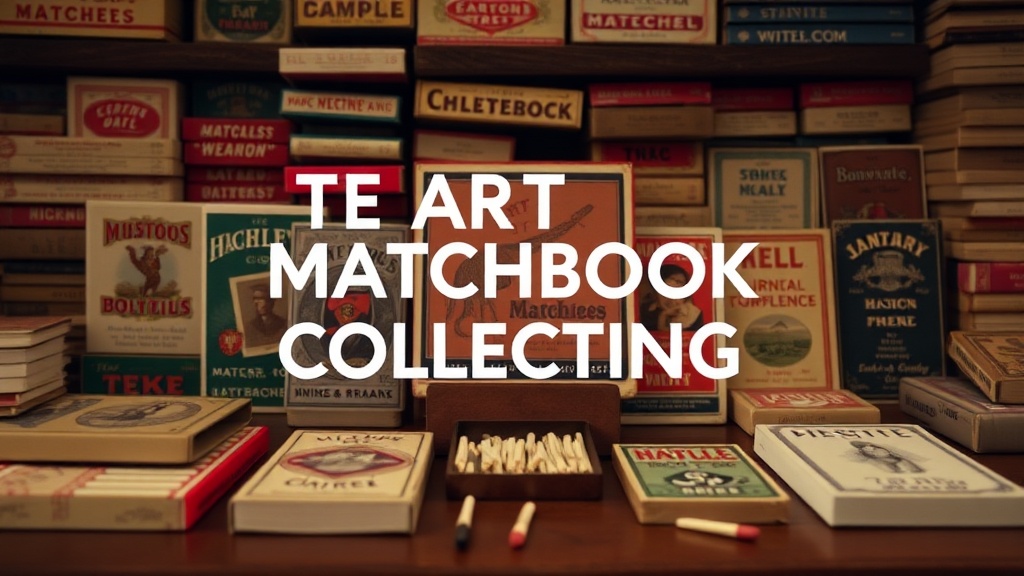
The Art of Vintage Matchbook Collecting: A Beginner's Guide

Understanding Matchbook Anatomy and Types
What Makes a Matchbook Valuable
Essential Storage and Preservation Methods
Best Places to Find Vintage Matchbooks
Building Your Collection Theme
This guide covers everything needed to start a vintage matchbook collection — from identifying valuable pieces and proper storage methods to building a focused collection that holds meaning. Matchbook collecting (known as phillumeny) offers an accessible entry point into the world of paper ephemera, with pieces ranging from free to thousands of dollars. Whether drawn to advertising history, graphic design, or the hunt for rare finds, this beginner's roadmap provides practical steps to build a collection worth keeping.
What Is Phillumeny and Why Do People Collect Matchbooks?
Phillumeny is the hobby of collecting match-related items — primarily matchbooks, matchboxes, and match labels. The term comes from the Greek "philos" (loving) and Latin "lumen" (light). Collectors call themselves phillumenists, and the community spans from casual hobbyists to serious archivists with tens of thousands of pieces.
People collect matchbooks for varied reasons. Some chase vintage advertising from defunct hotels, restaurants, and airlines. Others focus on graphic design evolution — watching how fonts, colors, and illustration styles changed across decades. Military matchbooks, sports memorabilia, and local history represent other popular collecting lanes. The hobby doesn't demand deep pockets, either. Flea markets, estate sales, and eBay listings offer plenty of entry-level material under $5.
Here's the thing: matchbooks represent a disappearing art form. Smoking bans, digital advertising, and disposable lighters killed the industry. Vintage pieces serve as miniature time capsules — holding advertising history in a pocket-sized format. That's part of the appeal.
How Can You Tell If a Vintage Matchbook Is Valuable?
Value depends on age, rarity, condition, and subject matter — with pre-1950s matchbooks generally commanding higher prices and certain categories (airlines, World's Fairs, military) attracting premium bids.
Age matters, but don't assume old equals valuable. Matchbooks appeared in the 1890s, with the Diamond Match Company pioneering the format. Early "diamond" style matchbooks — with the striker on the inside — date to the 1890s-1910s and fetch $50-500 depending on condition. The familiar "full-length" striker on the back became standard around 1915.
Rarity trumps age. A 1960s Sotheby's-graded airline matchbook from a defunct carrier like Braniff International or Pan Am can outsell a common 1920s hotel matchbook tenfold. Limited promotional runs, event-specific issues, and errors (misprints, upside-down labels) drive prices up.
Condition significantly impacts value. Serious collectors use this grading scale:
| Grade | Description | Value Impact |
|---|---|---|
| Near Mint (NM) | No wear, matches intact, striker unused | 100% (full value) |
| Excellent (EX) | Minor handling wear, matches present | 70-85% |
| Very Good (VG) | Visible wear, possible striker use | 40-60% |
| Good (G) | Heavy wear, matches missing or used | 15-30% |
| Poor (P) | Damage, staining, or heavy soiling | Minimal (5-10%) |
Subject categories also affect demand. Top-tier categories include:
- Airlines and railroads: TWA, Pan Am, United — especially pre-1970
- World's Fairs: 1939 New York, 1964-65 New York, 1962 Seattle
- Military: WWII-era services, PX issues, shipboard matches
- Hotels and resorts: Pre-1960 luxury properties, especially international
- Political campaigns: Presidential races from Harding through Kennedy
The catch? Condition fraud happens. eBay sellers sometimes list "vintage" matchbooks that are actually reproductions or modern reprints. Always request clear photos of the striker pattern and any patent dates printed inside.
What Equipment Do You Need to Start Collecting Matchbooks?
Basic supplies cost under $50 — archival sleeves, a storage album or box, soft gloves for handling, and a magnifying glass for examining small print and detail.
Archival protection matters more than you'd think. Paper ephemera deteriorates through light exposure, humidity fluctuations, and acid migration from cheap plastics. Standard PVC sleeves (the kind sold at office supply stores) will damage matchbooks over time — the plasticizers react with paper and ink. Instead, use BCW Supplies archival polypropylene sleeves or Mylar D sleeves rated for document preservation.
Storage options vary by collection size and display preferences:
- Three-ring binders with pocket pages: Best for viewing and organizing. BCW Pro 3-Pocket pages hold matchbooks vertically, preventing dust settling on the tops.
- Archival boxes: Better for bulk storage. Gaylord Archival and Hollinger Metal Edge both make acid-free document boxes in sizes fitting matchbook collections.
- Display frames: Shadow boxes with UV-protective glass let you rotate pieces into view — but keep them away from direct sunlight.
Worth noting: matches left inside matchbooks can deteriorate and "sweat" chemicals onto the cover. Most serious collectors remove the matches entirely (saving them separately in labeled envelopes) or at least separate the staple carefully to release tension on the cover.
Where Should Beginners Look for Vintage Matchbooks?
Start with estate sales, flea markets, and online marketplaces — then graduate to specialized dealers and collector clubs once you've developed your eye and preferences.
Estate sales in older neighborhoods often yield untouched collections accumulated over decades. The best finds happen early — arrive when sales open, and head straight for bedroom closets and desk drawers where matchbooks were typically stashed. Paper goods tables at estate sales sometimes price matchbooks in bulk lots, not realizing individual values.
Flea markets offer hands-on examination before purchase. The Rose Bowl Flea Market in Pasadena, the Brooklyn Flea, and Portland's own Saturday Market regularly have ephemera dealers with matchbook inventory. Build relationships with these sellers — they'll set aside pieces matching your interests.
Online sources include:
- eBay: Largest selection, but requires careful seller vetting. Search terms: "vintage matchbook lot," "phillumeny," or specific categories like "vintage airline matchbook."
- Etsy: Better for curated, display-ready pieces. Prices run higher, but sellers usually clean and grade accurately.
- Delcampe: Specialized paper collectibles marketplace with strong European matchbook selection.
- Facebook groups: "Phillumeny" and "Vintage Matchbook Collectors" groups host trading, sales, and authentication help.
That said, avoid buying "mystery lots" until you've learned to spot common reproductions. Cheap bulk lots from certain eBay sellers consist mainly of 1970s-80s generic advertising — low value, hard to resell, disappointing for beginners expecting vintage gems.
How Should You Organize and Store a Growing Collection?
Organize by category, region, or era — whichever system you'll actually maintain — and catalog pieces immediately upon acquisition to avoid forgetting provenance details.
Most collectors choose one primary sorting method:
- Geographic: By state, city, or country of origin. Works well for travel-related collections.
- Category: Airlines, hotels, restaurants, military, political, etc.
- Chronological: By era or decade — harder since many matchbooks lack dates.
- Visual: By color, design style, or size — favored by artists and designers.
Documentation separates casual collecting from serious phillumeny. At minimum, record where and when each matchbook was acquired, what was paid, and any known history. Collector software like Collectors Assistant or simple spreadsheets work fine. Photograph valuable pieces for insurance purposes — homeowner's policies often don't cover collectibles without riders.
Environmental control extends matchbook lifespan dramatically. Store collections at 60-70°F with 40-50% relative humidity. Basements and attics are terrible locations (temperature swings, moisture, pests). A closet in a living area works better than a "dedicated" storage space with climate issues.
What Are Common Mistakes Beginners Make?
New collectors often overpay for common pieces, neglect proper storage, or scatter their focus too widely before developing expertise in any area.
The "shotgun approach" — buying anything old or colorful — fills boxes fast but builds little value. Instead, pick a niche. Maybe it's Oregon Coast restaurants (local and hunt-able). Maybe it's 1950s Las Vegas casinos (high demand, documented history). Specialization lets you recognize true rarities when they appear and builds a collection with narrative coherence.
Another error: cleaning matchbooks aggressively. That "dirt" might actually be patina verifying age. Never use water, solvents, or erasers on vintage paper. A soft brush (like a makeup brush) removes loose dust. Stuck-on grime stays — attempted removal risks tearing printed surfaces.
Many beginners also ignore the Rathcamp Matchcover Society and regional clubs. These organizations publish journals, host conventions, and maintain expert networks. The knowledge shared in a single club newsletter outweighs months of solo internet research. Annual dues typically run $15-30 — cheaper than one overpriced "rare" matchbook purchase mistake.
Finally, don't expect quick profits. Matchbook collecting rewards patience. Buy what you enjoy looking at. The best collections reflect personal curiosity — not projected resale value. Build slowly, learn constantly, and let the hunt itself become the reward.