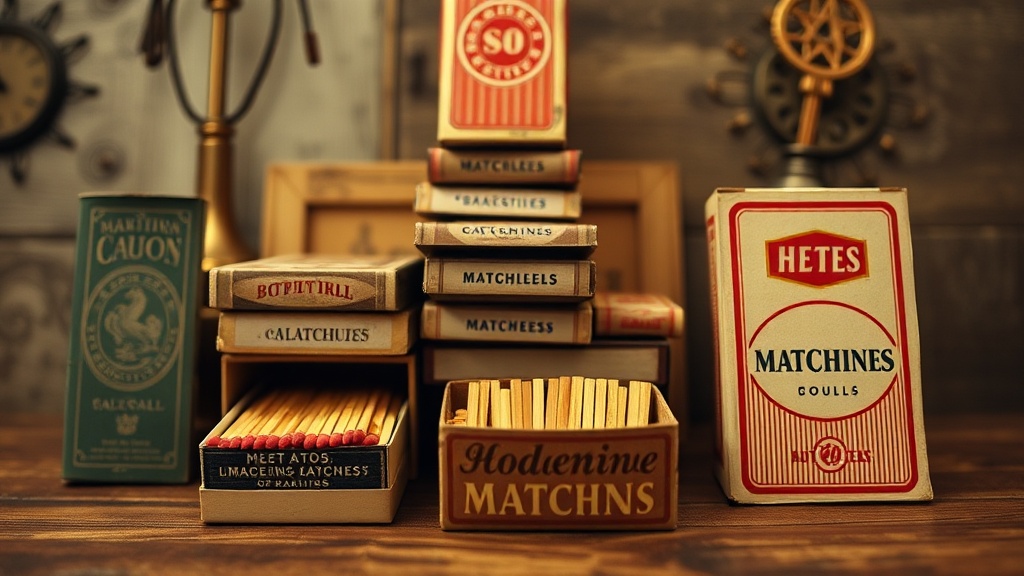
The Art of Collecting Vintage Matchbooks: A Beginner's Guide

What Makes Vintage Matchbooks Worth Collecting?
Vintage matchbooks offer an accessible entry point into the world of collectibles, combining artistic design, historical significance, and genuine affordability in a pocket-sized format. This guide covers everything needed to start a collection—from identifying valuable specimens and understanding condition grades to proper storage techniques and where to hunt for rare finds. Whether drawn to the vibrant lithography of 1940s advertising matchbooks or the minimalist elegance of mid-century hotel designs, there's a niche within this hobby for every taste and budget.
Unlike stamps or coins that often demand serious capital, quality vintage matchbooks can still be acquired for pocket change. That said, certain rare specimens command impressive prices at auction. The hobby rewards curiosity, patience, and a keen eye for detail rather than deep pockets.
How Do You Identify Valuable Vintage Matchbooks?
Not every old matchbook carries worth beyond sentimental value—condition, rarity, and subject matter determine desirability among serious collectors.
The most sought-after pieces typically fall into several categories. Hotel and restaurant matchbooks from the 1920s through 1950s—particularly those from establishments that no longer exist—document a bygone era of American travel and dining. Strike-on-match versus strike-on-box designs matter too; early matchbooks featured striking surfaces printed directly on the cover, while later versions moved this to the back panel.
Here's what separates a $2 matchbook from a $200 one:
- Condition: Mint specimens with unstruck matches and crisp corners fetch premiums. Faded colors, creases, or missing matches significantly reduce value.
- Rarity: Limited promotional runs, error prints, or matchbooks from defunct businesses create scarcity.
- Subject matter: Airlines, railroads, World's Fairs, and political campaigns consistently outperform generic local businesses.
- Artist signatures: Some high-end hotels commissioned famous graphic designers—Saul Bass created matchbook designs for several Hollywood establishments in the 1960s.
Worth noting: the "full book" versus "flat" distinction. Collectors prefer matchbooks with their original matches intact. A struck matchbook—one that's been used—typically sells for 50-75% less than its mint counterpart. That said, a rare design in any condition beats a common piece in perfect shape.
The Condition Grading System
Serious collectors use standardized grading. Understanding these terms helps when buying from dealers or selling your own finds.
| Grade | Description | Typical Value Impact |
|---|---|---|
| Mint (M) | Unstruck, crisp corners, vibrant colors, no soiling | 100% (baseline) |
| Near Mint (NM) | Minor imperfections visible only on close inspection | 80-90% |
| Excellent (EX) | Slight wear, minor corner rounding, colors still strong | 60-75% |
| Very Good (VG) | Obvious wear, possible light staining, matches may be struck | 40-55% |
| Good (G) | Heavy wear, significant damage, historical interest only | 20-35% |
The catch? Grading remains somewhat subjective. One dealer's "Excellent" might be another's "Very Good." Always request photos when buying online, and establish relationships with reputable sellers who grade conservatively.
Where Should Beginners Look for Vintage Matchbooks?
Flea markets, estate sales, and online marketplaces each offer distinct advantages for building a collection, though patience and persistence matter more than any single source.
Estate sales represent the gold standard for serious finds. Collections accumulated over decades often surface when collectors pass on or downsize. Arrive early—dealers know what they're looking for. The best strategy? Focus on sales in older neighborhoods where longtime residents maintained collections.
Flea markets reward the regular visitor. Vendors at Portland's Saturday Market or Brooklyn's Brooklyn Flea sometimes price matchbooks as "vintage paper ephemera" without understanding specific rarity. That said, knowledge cuts both ways—some dealers specialize in tobacciana and price accordingly.
Online marketplaces expand access but require caution. eBay offers the largest selection, though condition descriptions vary wildly. Specialized auction houses like Hake's Auctions cater to serious collectors and provide professional grading. For bargain hunting, Etsy sellers occasionally undervalue common pieces—perfect for filling thematic gaps affordably.
Collector clubs and conventions provide education alongside acquisition opportunities. The Rathkamp Matchcover Society—the premier organization for matchbook collectors—hosts annual conventions where members trade, sell, and authenticate pieces. Annual dues run about $35, and the quarterly journal alone justifies membership for serious enthusiasts.
Building Your First Collection Theme
Rather than accumulating randomly, successful collectors choose themes. This approach creates coherence and helps set meaningful acquisition goals.
Popular collecting themes include:
- Geographic: All matchbooks from Oregon, or every state capital, or Parisian cafes
- Industry-focused: Airlines (Pan Am, TWA, Eastern), railroads, or automotive brands
- Historical events: World's Fairs, Olympic Games, political campaigns
- Artistic: Art Deco designs, specific color palettes, or famous graphic designers
- Functional: Matchbooks with unusual features—built-in bookmarks, miniature rulers, or pop-up elements
Here's the thing: thematic collecting makes the hunt more satisfying. Instead of buying everything, you're searching for specific pieces. A friend in Portland spent three years acquiring matchbooks from every Oregon lighthouse—twelve pieces total. The quest mattered as much as the completion.
How Should You Store and Display a Matchbook Collection?
Proper storage prevents the deterioration that ruins value—light, humidity, and acidic materials pose the greatest threats to paper collectibles.
Matchbooks require archival-quality materials. Standard plastic sleeves often contain PVC, which degrades paper over time. Instead, invest in polypropylene or Mylar sleeves—the same materials museums use for document preservation. Companies like Gaylord Archival and University Products sell appropriate supplies.
Storage options vary by collection size and display preference:
- Three-ring binders with archival pages: Most economical for collections under 500 pieces. Allows easy browsing and reorganizing.
- Acid-free storage boxes: Better for large collections kept in climate-controlled spaces. Gaylord's flip-top document cases work well.
- Shadow boxes and frames: Attractive for display pieces, though limit light exposure—UV-filtering glass helps prevent fading.
Environmental conditions matter enormously. Store collections away from direct sunlight, maintain relative humidity between 30-50%, and avoid attics or basements where temperature fluctuations accelerate deterioration. Some collectors add silica gel packets to storage containers—replace these quarterly.
That said, don't become so protective that you stop enjoying the collection. Rotate displayed pieces periodically. Handle matchbooks with clean, dry hands (cotton gloves work but aren't strictly necessary for modern pieces). The goal is preservation, not paranoia.
Cataloging Your Collection
Documentation transforms accumulation into a proper collection. At minimum, record acquisition date, source, price paid, and condition grade. Spreadsheets suffice for small collections; serious collectors use specialized software like CollectionStudio or database applications.
Photograph significant pieces—insurance companies often require documentation for valuable collectibles. Store digital backups separately from physical records. A fire or flood that destroys the collection shouldn't wipe out the documentation too.
"The best collections tell stories. Write down where you found pieces, who sold them, what you were doing that day. In twenty years, those notes become as valuable as the matchbooks themselves." — Veteran collector at the 2023 Rathkamp convention
What Are Common Mistakes Beginners Make?
New collectors frequently stumble over authentication, overpaying for common pieces, and neglecting proper storage from day one.
Reproduction alert: Modern "vintage-style" matchbooks flood tourist markets. These aren't fakes—just new items styled to look old. Check for modern barcodes, contemporary fonts, or synthetic materials. True vintage matchbooks from before 1960 rarely feature plastic wraps or laminated surfaces.
Overpaying for sentiment: That matchbook from your grandparents' honeymoon hotel carries personal value—not necessarily market value. Research before paying premium prices. eBay's sold listings provide realistic price data, not just asking prices.
Ignoring condition: A rare design in poor condition might seem like a bargain. It's not—damaged pieces rarely appreciate, and restoration (when possible) costs more than buying properly preserved specimens.
The matchbook collecting community remains welcoming to newcomers. Attend a local club meeting before making significant purchases. Experienced collectors remember their own early mistakes and genuinely enjoy helping others avoid similar pitfalls. Bring a few pieces to show—collectors love seeing fresh material and sharing knowledge about obscure designs.
Start small. A focused collection of twenty carefully chosen matchbooks outshines a shoebox of random acquisitions. Research. Ask questions. Visit estate sales on Sunday afternoons when prices drop. Above all, collect what genuinely appeals to you—market trends shift, but personal enthusiasm sustains the hobby for decades.