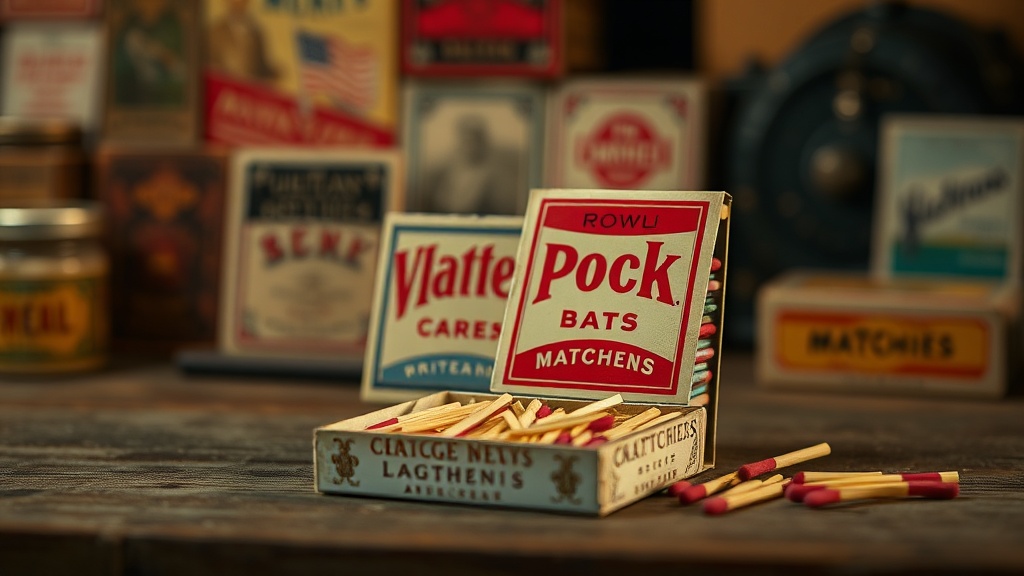
Protecting Your Vintage Matchbook Collection From Light Damage

Why Light Exposure Destroys Paper and Print
Most people think that keeping their matchbooks in a dark drawer or a closed box is enough to protect them. They assume that if the matchbook isn't sitting under a bright lamp, it's safe. That's a mistake. Even ambient light—the kind that drifts through a room during the day—can cause irreversible damage to the pigments and paper fibers of your collection. This isn't just about colors fading; it's about the structural integrity of the paper itself. When UV rays hit vintage paper, they trigger a chemical reaction that breaks down the cellulose, making the matchbook brittle and prone to cracking. If you want your collection to remain a vibrant part of your archive, you have to look beyond just "shade."
The damage happens on a microscopic level. The ink used in mid-century printing—often heavy on certain reds and yellows—is particularly sensitive to light. If you've ever noticed a matchbook that looks bright and punchy on one side but dull and washed out on the other, you've seen light damage in action. This unevenness happens because one side was exposed to a light source (like a nearby window or a display shelf) while the other stayed protected. It's a slow, silent process that can take years to become obvious, but by the time you notice it, the pigment loss is permanent.
Does UV Protection Actually Work for Paper Collectibles?
The short answer is yes, but you have to use the right tools. Many hobbyists buy cheap plastic sleeves thinking they are safe, but standard clear plastic often provides zero protection against ultraviolet rays. If you're looking to display your matchbooks, you can't just rely on any old acrylic box. You need to seek out materials specifically rated for archival use.
There are a few ways to approach this depending on how you want to interact with your collection:
- UV-Filtering Acrylic: If you have a display case, ensure it uses museum-grade acrylic that blocks at least 97% of UV rays. This is a significant jump from standard hardware store plastic.
- Linen and Fabric Storage: For pieces you aren't currently displaying, storing them in acid-free linen boxes is much better than keeping them in cardboard or standard plastic bins.
- Glass Window Films: If your collection sits in a room with a lot of natural light, applying a UV-blocking film to your windows is a smart move. It protects not just your matchbooks, but your entire paper archive.
According to the Library of Congress, light is one of the most persistent enemies of paper-based artifacts. It's a constant pressure that doesn't stop just because the lights are turned off. Even the light from a television or a computer monitor can contribute to long-term degradation if the collection is positioned too close.
Can I Use Standard Plastic Sleeves to Prevent Fading?
A common mistake is grabbing a handful of cheap, clear plastic sleeves from an office supply store. These are often made of PVC (polyvinyl chloride), which is a nightmare for collectors. Not only does PVC often contain plasticizers that can leach out and become "sticky," but it also does very little to stop light from reaching the paper. If you use these, you might actually be accelerating the damage through a combination of light and chemical off-gassing.
Instead, look for archival-grade sleeves that are free of PVC and acid. When you're choosing a storage method, check the material properties. High-quality polypropylene is a much safer bet for matchbooks because it's chemically stable and doesn't react with the ink or the paper. This ensures that the matchbook stays in the condition you found it in, rather than becoming a fused, illegible mess of paper and melted plastic.
"The goal isn't just to hide the collection away; the goal is to preserve the visual history without losing the physical substance."
If you are a serious collector, you should also consider the placement of your display. Avoid placing your shelves directly across from a window. Even if the light isn't direct, the cumulative effect of ambient light is enough to leach the life out of a 1950s diner matchbook. If you have a piece that is particularly rare or colorful, treat it like a piece of fine art. It deserves a controlled environment. You can learn more about general archival standards through organizations like the Library of Congress, which provides extensive documentation on the preservation of various media.
A good rule of thumb: if you can see the colors clearly under a bright light, that light is working to destroy them. The more vibrant the print, the more sensitive it likely is to the light spectrum. This is especially true for the high-contrast, saturated colors found in many mid-century commercial prints. By being proactive about light management, you aren't just saving a piece of paper; you're saving a piece of history.