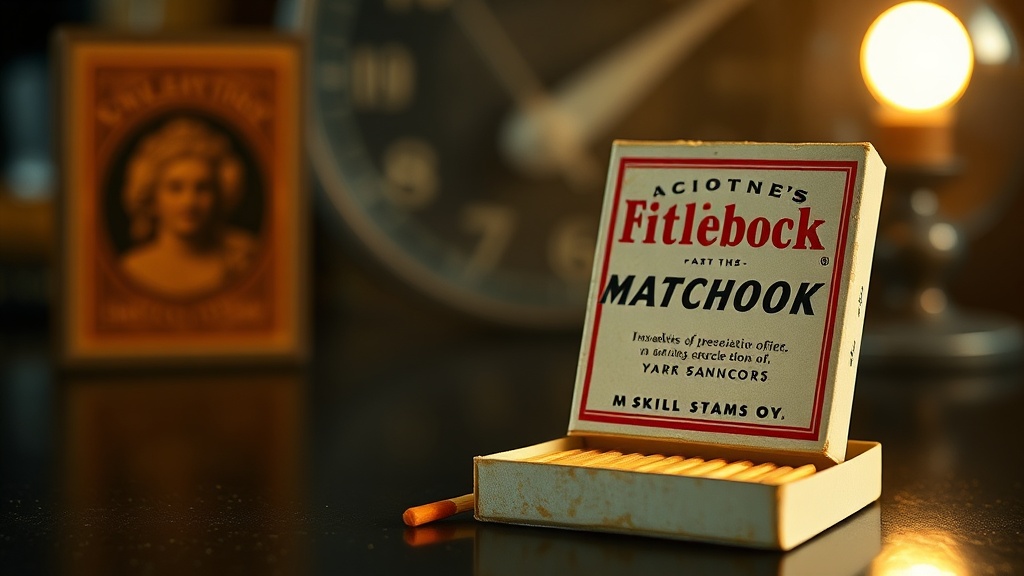
How to Tell If Your Vintage Matchbook Is Actually From the Era It Claims

The matchbook industry produced an estimated 500 billion matchbooks during the 20th century — that's roughly 20 matchbooks for every person alive today. Yet browsing online marketplaces, you'd think every third listing is a "rare 1920s find." The reality? Most "vintage" matchbooks circulating today are either common specimens marked up by uninformed sellers or modern reproductions designed to fool nostalgic buyers. Learning to authenticate what you're holding isn't about snobbery — it's about protecting your wallet and respecting the actual history of these paper artifacts.
How Can You Tell If a Matchbook Is Genuinely Vintage?
The paper itself tells the first story. Pre-1960s matchbooks used wood-pulp stock that aged distinctly — turning a warm cream or light tan rather than staying stark white. (If that "1930s hotel" matchbook looks like it was printed yesterday on bright white cardstock, your suspicions should rise.) Run your finger along the spine; vintage matchbooks have a subtle texture from the wire staples that differs from modern glue-bound reproductions.
Printing methods changed dramatically across decades. Early matchbooks (1920s-1940s) used letterpress printing — you can feel the slight impression of the type into the paper surface. Hold the matchbook at an angle to catch the light; genuine letterpress leaves a tactile valley where the ink sits. By the 1960s, offset lithography dominated, creating flatter images without that dimensional quality. Modern inkjet reproductions — common in fake "vintage" advertising matchbooks — deposit ink that sits on top of the paper rather than soaking in. Touch the colors; if they feel raised or plasticky, you're likely handling a recent print-on-demand fake.
The strike strip provides another authentication point. Genuine vintage strike strips contain red phosphorus (the friction surface) layered over powdered glass and glue. Under magnification, you'll see a granular, almost sandy texture. Modern safety matches moved away from this composition, and reproductions often use cheaper chemical compounds that look too uniform — almost painted on. (Some serious collectors keep a jeweler's loupe specifically for this inspection.)
What Are the Warning Signs of a Reproduction Matchbook?
UV light reveals what the naked eye misses. Vintage paper stock fluoresces differently than modern bleached papers. If you have access to a blacklight, genuine pre-1970s matchbooks generally show minimal fluorescence — they'll look dull or show slight yellowing. Modern papers glow bright blue-white under UV light because of optical brighteners added during manufacturing. This test isn't foolproof — storage conditions affect fluorescence — but it's a reliable indicator when combined with other factors.
Pay attention to the matches themselves. Original vintage matchbooks contain wooden splints (the match sticks) made from white pine or aspen — lightweight woods that show subtle grain patterns under close inspection. Reproductions often use composite materials or dipped wooden sticks that look too perfect. The match heads on genuine vintage specimens show slight color variation from batch mixing; factory-made reproductions have unsettlingly uniform match heads.
The most common reproductions target specific nostalgia markets — 1950s diners, Route 66 memorabilia, and Prohibition-era speakeasy themes. If you see a "vintage" matchbook from a business that never actually existed — "Joe's Diner, 1952, Route 66" with no specific location — you're likely looking at a fantasy piece manufactured in the last decade. Real vintage matchbooks advertised real businesses; they were functional advertising tools, not decorative novelties.
Where Should You Look for Authentication Marks?
Flip the matchbook over and examine the back panel. Genuine vintage matchbooks often include manufacturing codes — small numbers or letters printed near the bottom edge that indicate the production plant and date. The Diamond Match Company used a complex dating system throughout the mid-20th century; other major manufacturers like Ohio Match and Federal Match had their own coding methods. The Rathkamp Matchcover Society maintains detailed databases of these manufacturer codes, making them an invaluable resource for serious collectors.
Check the copyright or "match patent" information. Early matchbook patents expired in the 1920s, but manufacturers continued printing patent numbers through the 1940s. These numbers correspond to specific design innovations — the "bell" shaped matchbook versus the "saddle" style, for instance. Modern reproductions often either omit these details entirely or print nonsense numbers that don't correspond to any historical patent. Cross-referencing patent numbers through the United States Patent and Trademark Office database takes minutes and can save you from expensive mistakes.
The striker position offers clues too. Pre-1940s matchbooks typically featured strike strips on both the front and back covers. Single-striker designs became standard later as manufacturing simplified. If someone claims a matchbook is from the 1920s but it only has one strike surface, you'd better see other strong indicators of age — or start negotiating hard on price.
Why Do Sellers Misrepresent Matchbook Ages?
Not every misdated matchbook represents intentional fraud. Estate sale organizers, garage sale hosts, and even some antique dealers simply don't know what they're handling. They see old-looking paper and assume age. The matchbook collecting hobby doesn't have the same infrastructure as stamp or coin collecting — there's no standardized grading system, no mandatory authentication for sales, and plenty of gray areas about what constitutes "vintage" versus "antique."
However, the intentional fake market grows annually. Reproduction matchbooks cost pennies to manufacture overseas and sell for $10-25 online to uninformed buyers seeking "vintage barware" for their home décor. These sellers count on buyers not knowing the difference between a 1960s motel matchbook and something printed last year in a factory that specializes in "distressed" paper goods.
How Should You Handle Suspect Finds?
When you encounter a questionable matchbook at a flea market or estate sale, start with questions rather than accusations. Ask the seller where they acquired the item — provenance matters even for humble paper goods. A matchbook pulled from a deceased uncle's desk drawer where he worked for forty years carries different weight than something "found at a garage sale" with no backstory. Don't be afraid to point out inconsistencies you notice; honest sellers will engage with your concerns or admit uncertainty about dating.
Pricing should reflect certainty. If a seller can't verify age but the matchbook shows genuine wear and appropriate manufacturing details, negotiate a price appropriate for an "undated vintage" specimen rather than a confirmed 1940s rarity. Walk away from items where the seller insists on premium prices despite obvious red flags — bright white paper, modern fonts, or claims about "limited edition vintage reproductions" (an oxymoron that should make any collector wince).
Document your own collection carefully. Photograph both sides, note the acquisition source, and record any manufacturer codes you find. This practice helps the collecting community track which specimens circulate and builds the knowledge base that protects future buyers. The Smithsonian Institution holds significant matchbook collections; their online archives offer comparison examples for authentication study.
Collecting vintage matchbooks connects you to a specific moment in American commercial history — when businesses gave away functional art, when typography mattered on every street corner, when advertising was held in your hand rather than fed through algorithms. That connection deserves respect. Taking time to authenticate what you buy preserves the integrity of the hobby and ensures that the stories these small paper items carry remain genuine rather than manufactured nostalgia.